MLB Pitchers Injury and Performance Forecast
Real-life dataset exploration and analysis that provided rich insights into how to best maintain and develop MLB pitchers
Goal
Given a detailed dataset containing MLB pitchers’ performance and injury records from 2010 - 2020, we aimed to analyze them to determine key variables that coaches should look out for when maintaining and improving their players.
Winning a season is not a sprint, but a marathon. It is crucial to keep players in shape and have high performance whilst minimizing the risk of injury.
Results
By using univariate T-test, linear regression, logistic regression, and Poisson regression, we have observed the following:
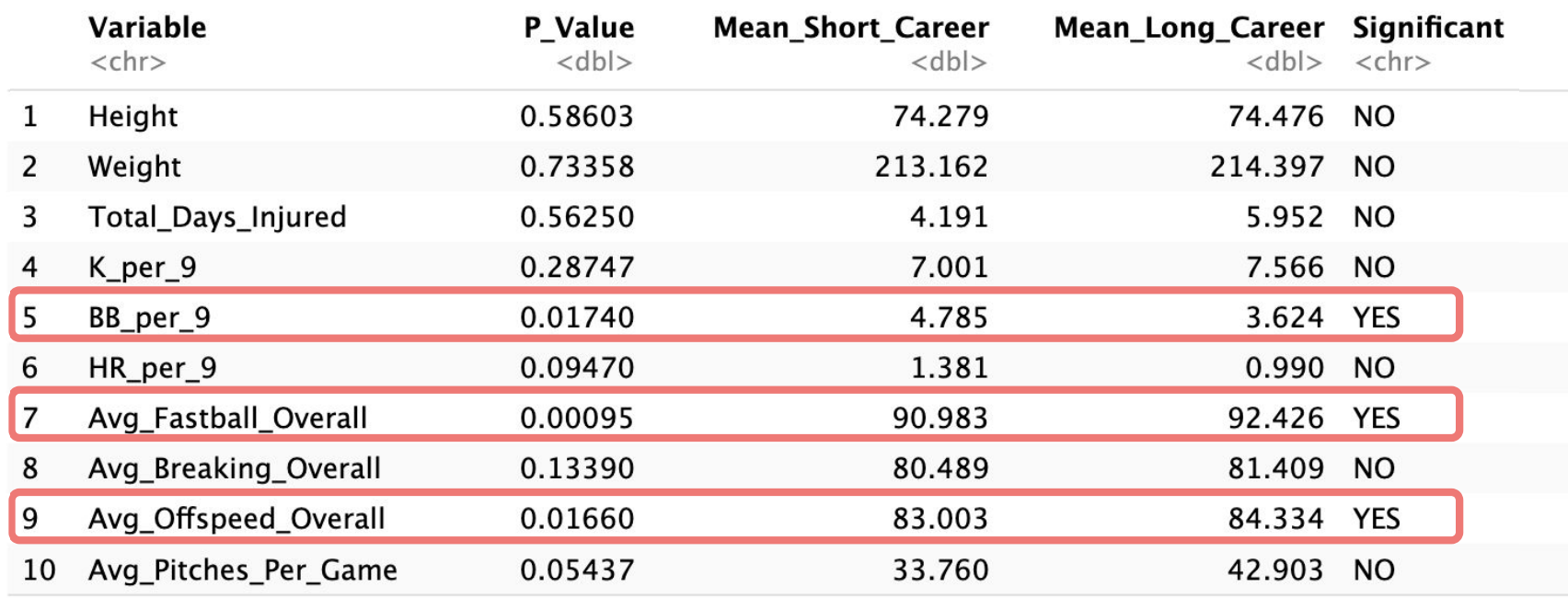
- Key to long careers: Longer careers are predicted by lower rates of walks given, higher fastball velocity, and more outs achieved in the first two years of a pitcher’s career.
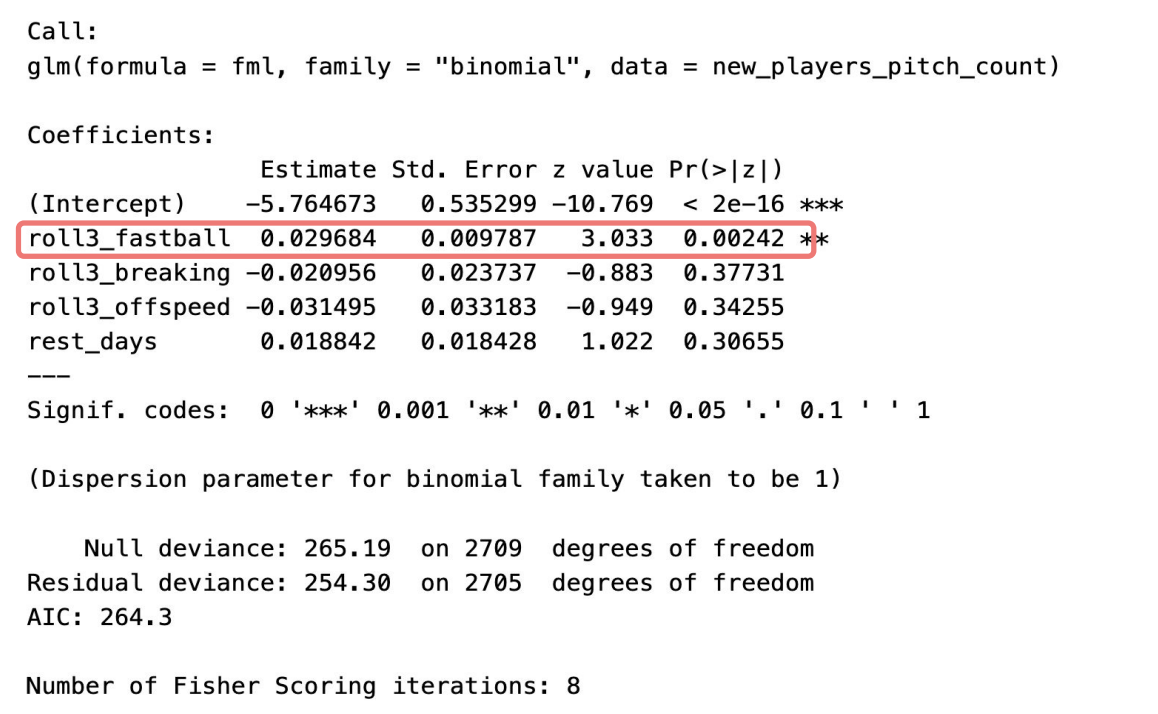
- Injury risks: Higher cumulative fastball counts over the past 2 games increases the chance of the pitcher getting injured in this game.
- Pitch type advantages: Among rookie pitchers, breaking balls lead to more strikeouts, fastballs lead to more walks, and offspeed balls are more likely to get hit a home run
With these findings, we suggested that:
- Injury prevention: Baseball teams should closely monitor their pitchers’ rolling fastball workload, as sustained stretches of high fastball usage meaningfully increase short-term injury risk.
- Pitcher development pan: Early-career development should emphasize sharpening command, since lower walk rates consistently predict longer MLB careers. Improving breaking-ball quality offers the greatest upside for generating strikeouts, while refining offspeed control can directly reduce susceptibility to home runs.
- Scouting for future stars: Scouts should prioritize identifying prospects with strong fastball quality, as this pitch is the foundation of pitching success and is the most important pitch in the game.
We have summarized our findings and recommendations into the presentation slides below.
What I did
- Data cleaning and wrangling
- converting character sequences into machine-interpretable columns
- NA removal
- Exploratory data analysis
- Analysis of the second research question: Among new pitchers, are there specific pitches that lead to a higher chance of injury or better performance?
- Fit a logistic regression model to predict the chance of pitcher injury; achieved AUC of 0.69
- Fit 4 Poisson regression models to examine the most important pitch type associated with each performance metric
- Finding organization and report writing
Full report
You can read our full report on the project below.